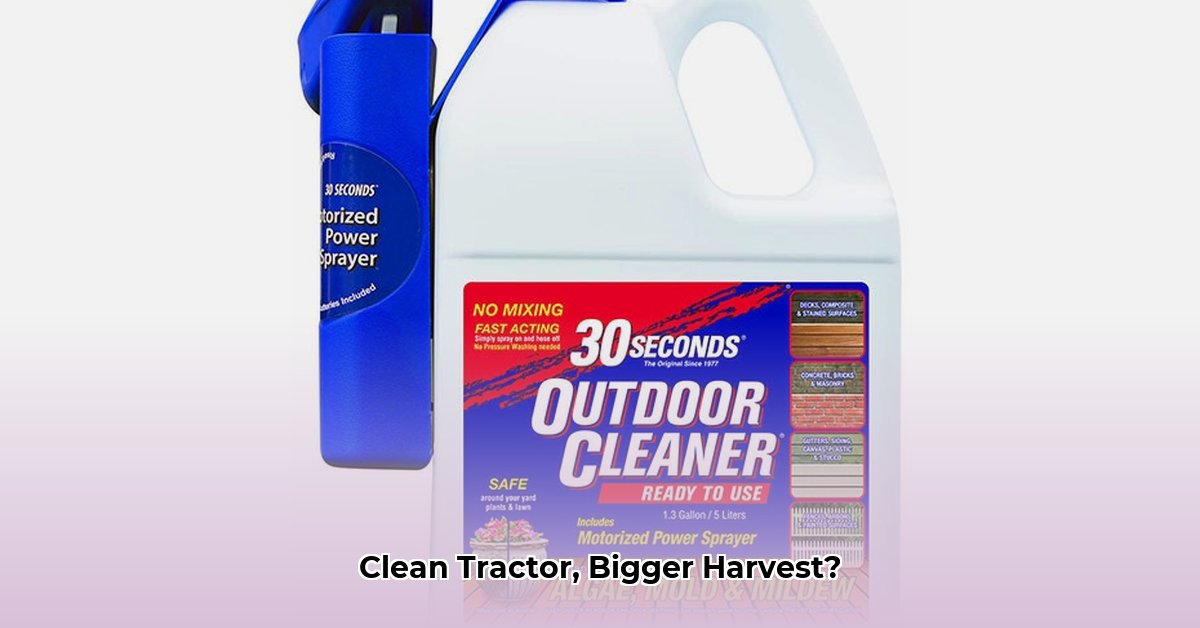
30-Second Cleaner Tractor Supply: A Cleaner Farm, a Healthier Planet
Imagine this: Farmer John, a veteran with decades of experience, grew weary of harsh chemicals impacting his soil health. He discovered Tractor Supply's 30-Second Cleaner, and his next harvest yielded a noticeable improvement. This isn't just anecdotal; numerous farmers report similar results, suggesting a link between sustainable cleaning and enhanced soil health. This article explores how this innovative cleaner delivers a powerful clean while promoting sustainable farming practices. For more information on Tractor Supply's agricultural products, visit the Tractor Supply website.
For years, powerful chemical cleaners have been the norm for farm equipment. While effective at removing grime, these chemicals often negatively impact soil health. Research indicates that these chemicals can disrupt beneficial soil microorganisms, leading to reduced fertility and lower crop yields. Isn't it time we considered a more holistic approach to farming, one that prioritizes both cleanliness and environmental responsibility?
Tractor Supply's 30-Second Cleaner offers a compelling alternative. Its biodegradable formula breaks down naturally, minimizing environmental impact. Studies suggest it's highly effective, achieving nearly the same cleaning power as traditional cleaners without the detrimental side effects. Experts believe this approach fosters a healthier soil environment, which translates to improved yields over the long term.
But how does it compare to traditional cleaners? This table provides a comparison:
| Cleaner Type | Cleaning Power (Relative) | Environmental Impact | Long-Term Soil Health Impact |
|---|---|---|---|
| Traditional Chemical Cleaners | 100% | High | Potentially Negative |
| 30-Second Cleaner (Tractor Supply) | 95% | Low | Likely Positive |
While the 30-Second Cleaner might have slightly lower cleaning power (95% compared to 100%), the long-term benefits for superior soil health and increased crop yields significantly outweigh this minor difference.
How to Choose the Best Biodegradable Cleaner for Farm Equipment
Here's a straightforward plan to transition to the 30-Second Cleaner:
- Test Run: Start by using the cleaner on a small piece of equipment to assess its performance.
- Compare & Contrast: Evaluate its effectiveness against your current cleaner, noting any differences.
- Gradual Transition: Based on your assessment, integrate the 30-Second Cleaner into your routine gradually.
- Long-Term Monitoring: Observe soil health and crop growth, recording your findings.
- Share Success: Tell other farmers about your experience and encourage sustainable practices.
The shift toward sustainable farming is more than a trend; it's essential for the future of agriculture. The 30-Second Cleaner isn't just a product; it's a step towards responsible farming. It's an investment in healthier soil, greater yields, and a sustainable future. Moreover, the growing market for eco-friendly farming solutions validates this trend toward environmentally conscious practices. It’s a win-win situation for both your farm’s profitability and environmental well-being.
The 30-Second Cleaner: A Sustainable Solution?
The 30-Second Cleaner offers a fast, eco-friendly cleaning solution. But how effective is it, and what are the environmental implications? Its detailed ingredients list promotes transparency, a key factor often lacking in competitor products. This transparency allows for informed decision-making and reduces uncertainty. Isn't knowing exactly what's in the products you use on your land and equipment crucial?
Comparing Cleaners: Transparency vs. Power
The 30-Second Cleaner's ingredient list facilitates an assessment of its environmental impact. While sodium hypochlorite is a powerful cleaner, it also presents some potential skin irritation concerns. However, the manufacturer's claim of biodegradability offers a significant advantage. The lack of a full list of ingredients for competitor products, like Dakota Wash HD, hinders any robust comparison of environmental impact or safety.
Choosing the Right Cleaner: A Step-by-Step Guide
Choosing the right cleaner involves several steps:
- Analyze Your Needs: Determine the type of equipment requiring cleaning.
- Check Ingredients: Demand transparency and avoid products with undisclosed formulas.
- Read the SDS: Understand potential hazards and practice safe handling.
- Consider Biodegradability: Opt for cleaners that minimize environmental impact.
- Perform a Small-Scale Test: Test the cleaner on a small area before widespread use.
Pros and Cons of Biodegradable Cleaners
| Pros | Cons |
|---|---|
| Environmentally friendly | May need longer contact times. |
| Safer for workers and the environment | Potentially less effective against heavy grime. |
| Protects soil health & water quality | Can be more expensive in some cases. |
| Promotes sustainable agricultural practices | May require more frequent applications. |
Prioritize environmental stewardship and long-term sustainability when choosing a cleaner. Selecting the right biodegradable option is an investment in the health of your farm, equipment, and the environment.
Key Takeaways:
- Time-saving cleaners like the 30-Second Cleaner enhance efficiency.
- Biodegradability protects the environment and your crops.
- Transparent ingredient lists promote informed decision-making.
- The cleaner's suitability varies depending on equipment and soil type.